Morocco nearly shook the world in 2022. With 48 teams in 2026, could the first African team to win the World Cup finally emerge? A deep dive.

First African Team to Win the World Cup — Could It Finally Happen in 2026?

Africa was robbed.
Not by a referee. Not by a bad draw. By a single Youssef En-Nesyri header that wasn’t enough, and a Croatian wall that refused to fall in Doha. But Morocco in 2022 did something that changed the conversation permanently — they proved that an African side could reach a World Cup semi-final, dismantle European giants, and make the planet hold its breath. That moment planted a seed. And now, with the FIFA World Cup 2026 expanding to 48 teams across the United States, Canada, and Mexico, the question isn’t hypothetical anymore: could the first African team to win the World Cup finally be a real, achievable story?
This guide is for football fans who already know their AFCON brackets from their FIFA rankings, who felt something shift in their chest when Achraf Hakimi scored that penalty against Spain, and who want a serious, clear-eyed look at whether 2026 changes things for the continent. We go from history to format to the squads that have a genuine shot. No fluff. Just football.
Where Africa Has Been — A History Worth Knowing
The story starts in 1966 when North Korea — yes, not an African side, but bear with the context — shocked the world and reminded everyone that football belongs to no one continent. Africa’s own World Cup story begins properly in 1990, when Cameroon’s Indomitable Lions tore through Argentina and nearly eliminated England. Roger Milla dancing at the corner flag. An image burned into the memory of every African fan over forty.
From there, the milestones came in waves. Senegal reaching the quarter-finals in 2002. Ghana pushing Uruguay to a penalty shootout in 2010, with Luis Suarez’s handball and Asamoah Gyan’s miss still haunting West African football fans like a ghost that never leaves. Nigeria, Côte d’Ivoire, Egypt — all producing World Cup moments that glittered before going dark too soon.
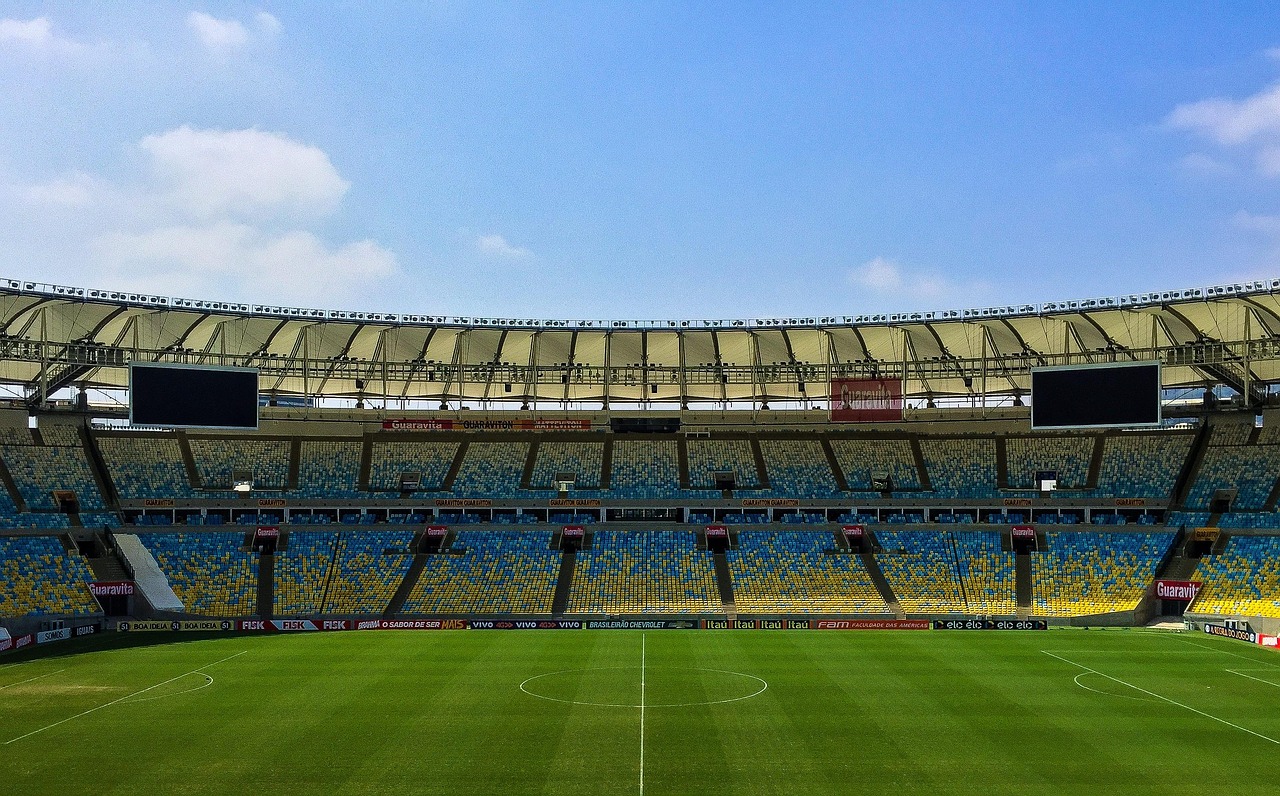
First African Team to Win the World Cup — Could It Happen in 2026?
Which African Squads Are Built for the Distance?
Morocco are the obvious answer, and they deserve to be. Hakimi at right-back is still one of the best in the world at his position. Sofyan Amrabat, if fit, anchors midfield with a controlled aggression that European clubs have spent fortunes trying to replicate. Up front, the question of who leads the line remains — but Regragui has shown he can build a functioning attack even without a traditional number nine.
Senegal should not be underestimated. Sadio Mané may be past his Liverpool peak, but he remains an aspirational figurehead and a player who elevates those around him. The Atlas Lions and the Lions of Teranga represent the two most complete squads on the continent right now. Nigeria — when they commit to a coherent system rather than relying on individual brilliance — have the talent pool to compete deep into a tournament. Victor Osimhen alone is worth watching every minute he’s on the pitch.
The 48-Team Format — Why It Actually Changes African Chances
Some purists (and I have some sympathy for this view, honestly) argue that expanding to 48 teams dilutes the competition. More teams, more mismatches, longer tournament. But for African football specifically, it’s genuinely transformative.
Consider what five spots meant. Five teams from a continent with fifty-four footballing nations, several of whom — Mali, Egypt, South Africa, DR Congo — are capable of causing real damage in a World Cup knockout round. The qualifying process was already brutal. An entire nation could go unbeaten through their group and still miss out on the final playoff spots. Now nine teams get through. That’s nine different stories, nine different potential Cinderella runs.
There’s also a tactical argument. African coaches have long complained that World Cup preparation is compressed — shorter build-up windows, less time to integrate players from European clubs. With a group stage that now includes a third-place qualification route in each mini-group, there’s marginally more room to find form mid-tournament. That extra match can be the difference between going home and hitting your stride.
The AFCON Connection — Why Winning in Africa Matters More Than You Think
What the Group Draw Means for African Teams in 2026
Expert Opinion — What the Football World Is Actually Saying
Since Morocco 2022, the shift in how European football analysts discuss African football has been noticeable. What was once polite acknowledgement of individual talent has evolved into serious tactical analysis of African coaching methods, pressing systems, and defensive organisation.
Analysts across major football media have pointed to Regragui’s work as a blueprint — not just for African sides, but as a study in how a team with less physical resource can defeat opponents worth exponentially more on paper. The idea that African teams must copy European styles to succeed is losing ground. Morocco showed a different path: be resolute, be organised, attack on the counter with devastating speed, and believe absolutely.
The question of what it would mean culturally if an African team won the World Cup is almost too big to process. Imagine Dakar, Lagos, Nairobi, Casablanca in the moments after a final whistle. That wouldn’t just be football. That would be a continental moment that reshapes how a generation of young players sees their own ceiling.
What Stands Between Africa and the Trophy
Let’s not romanticise the obstacles away. South American and European nations still dominate the later rounds of World Cups for structural reasons — deeper domestic leagues, more Champions League experience, greater resources for youth development. Bridging that gap in one tournament cycle requires almost everything to go right.
Injuries to key players — Hakimi, Amrabat, Mané, Osimhen — could derail any of the continent’s best squads at the worst moment. Coaching continuity matters too. Any major change in the dugout in the year before a tournament can unravel tactical systems that took years to build. And the mental weight of carrying an entire continent’s aspirations? That’s a pressure unlike anything else in sport.
But here’s the rhetorical question worth sitting with: if not now, when? The format is wider. The talent is real. The belief, after 2022, is earned rather than assumed. The conditions for something historic have never been better aligned.
Quick-Reference Summary — What You Need to Know
- Morocco 2022 was the landmark — semi-final proof that African football can compete at the highest level tactically and physically.
- The 48-team format sends nine African teams to the 2026 World Cup, up from five — the biggest structural change African football has ever had at this tournament.
- Morocco and Senegal enter 2026 as the continent’s strongest sides, with Nigeria and others capable of deep runs with favourable draws.
- AFCON performance remains a strong indicator of World Cup readiness — teams that win or run deep in AFCON carry a collective resilience that shows up under pressure.
- The group draw matters enormously — seeding based on FIFA rankings gives stronger African nations a chance to avoid the very worst groups.
- Obstacles remain real — injury, coaching instability, and the accumulated depth of European and South American squads are not easily overcome in one cycle.
- The first african team to win the world cup could it happen in 2026 — the honest answer is: it’s no longer a wild dream. It’s a live possibility, and 2026 might be the closest the continent has ever come to finding out.


New Casinos

1xBet Bookmaker | Bet on Sports & Play Casino Online

Mwors Zimbabwe – Online Sports Betting & Casino

Bwinners | Sport Betting & Casino Online in Zimbabwe | Aviator

PremierBet Zimbabwe | Bet on Sports & Play Casino Online



Top Rated Casinos

PremierBet Zimbabwe | Bet on Sports & Play Casino Online

Bwinners | Sport Betting & Casino Online in Zimbabwe | Aviator

Mwors Zimbabwe – Online Sports Betting & Casino

1xBet Bookmaker | Bet on Sports & Play Casino Online